
Several weeks ago I shared insights about how to make progress when you or your team don’t have all the answers. This practice of small steps is true both at work and at home.
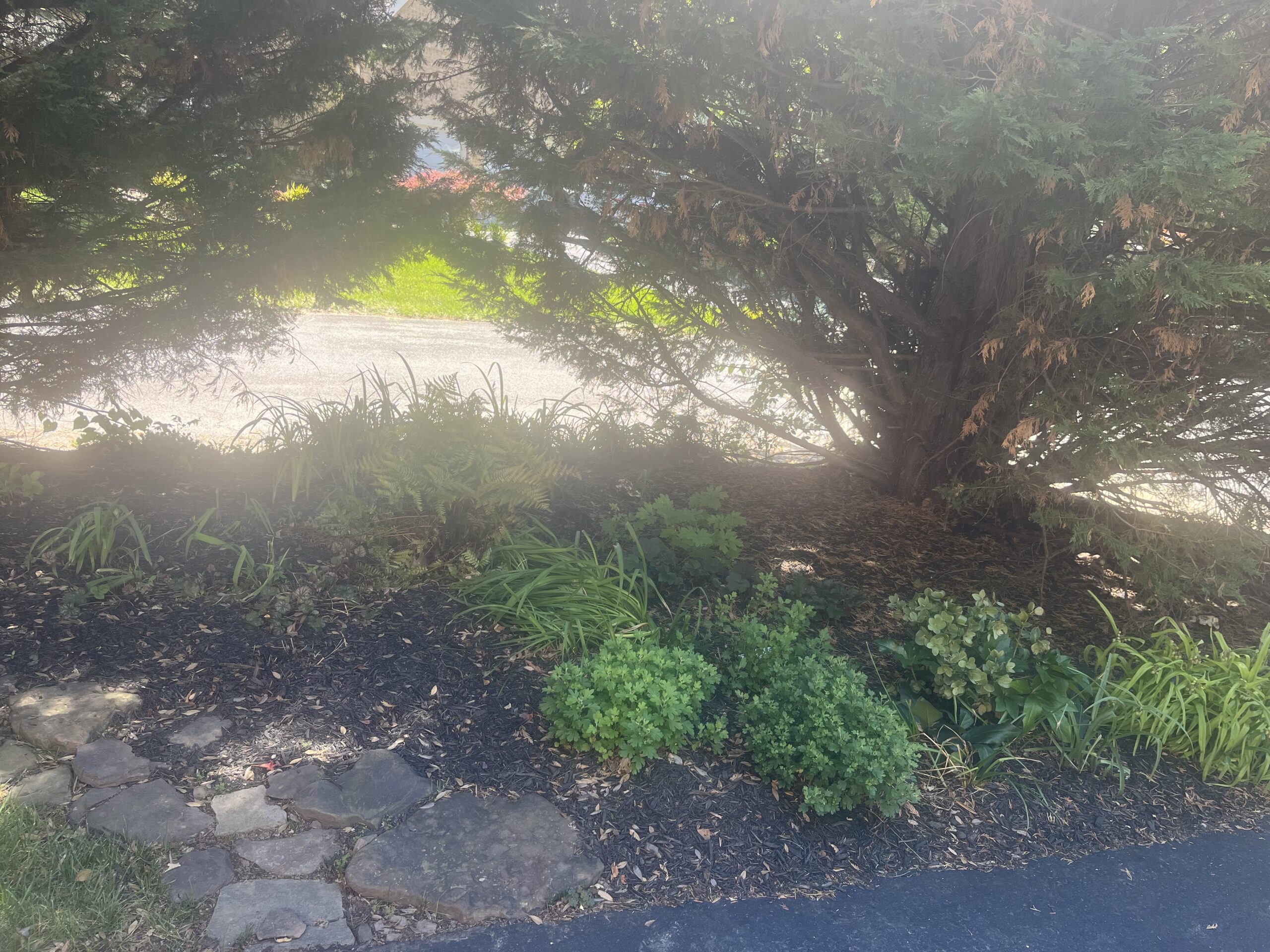
In November 2020, I started a garden. I know, everyone did something slightly unhinged during the pandemic. Some people baked sourdough and others learned to knit but I already knew how to knit, so I decided I needed another garden.

The timing was not ideal. It was mid-November in Maryland, the days were getting shorter and the first frost was coming. I was working full time, which during a pandemic meant I was working all the time. And the area I wanted to transform was not small. A sensible person would have waited until spring. Instead, I walked outside with a shovel and I just started a section by the trees. I dug in one place and I planted a fern that I hoped would become the centerpiece.
And then, almost without deciding to, I kept going. The next day before dinner I shoveled a little more. And then a little more and within a few weeks, the entire area had been transformed from a patchy grass lawn into a perennial garden that I am currently enjoying each time I pull into my driveway.
A project that seemed huge, became completely doable, and it wasn’t because I made a grand plan, but because I started small and let the momentum carry me.
I think about that garden often when I’m working with leaders and teams who are stuck. They aren’t stuck because they don’t know what to do. They are stuck because the whole thing feels too big to start.
The strategic initiative is too complex. The culture shift is too slow. The team restructure is too uncomfortable and therefore nothing happens. Of course the longer nothing happens, the more overwhelming it feels, and the less likely anything is to start. Research regarding this backs up my experience in the garden. Small actions produce momentum, and momentum changes everything.
Psychologist BJ Fogg, who has spent years studying behavior change, found that tiny habits, actions so small they seem almost silly, are often the most reliable path to lasting change. Atomic Habits, by James Clear explains how little habits will become a lifestyle.
A win, even a small one, tells your brain: this is possible. And a brain that believes something is possible behaves very differently than one that doesn’t.
So what does this look like in your organization?
- Instead of overhauling the entire feedback culture, have one honest conversation this week.
- Instead of redesigning the strategic plan, identify one priority you can actually act on today.
- Instead of designing the entire plan, start the design of one element.
Every time I pull into my driveway, I think about the garden that started with a fern. It has helped me start other projects and create momentum in other areas where I was feeling stuck.
What’s the section by the trees in your work right now?



0 Comments