

When I think about succession planning, I’m reminded of a client I worked with over a decade ago — a law firm that ran like a well-oiled machine in nearly every way. Its HR processes were well-established, its operations efficient. Except in one critical area; succession planning.
One of the partners had a strong aversion to discussing employees. She had been, in her words, “burned” as an associate, and firmly believed that any conversation about staff amounted to gossip. As a result, discussions about performance were avoided, promotions lacked clear guidelines, and succession planning simply didn’t happen.
The HR director and I met with her to show how avoiding conversations didn’t just prevent gossip — it also prevented fairness. Without structured discussions, associates weren’t getting the feedback, mentoring, or opportunities they needed to grow within the firm. To bring some architecture to the process, we introduced the 9 Box method, a tool designed to guide discussions and assess talent by evaluating both performance and potential.
The first 9 Box meeting was tense. But as the team began using the framework, conversations became more straightforward and productive. Over time, the firm saw how structured discussions didn’t just help with succession planning — they also created a path for high-potential employees to receive the training and cross-training they needed to advance.
I am sharing the 9 Box method here so you can use it in your organizations. It is a strategic tool I use in organizations to assess talent objectively and ensure that the organization’s future leadership pipeline stays strong.
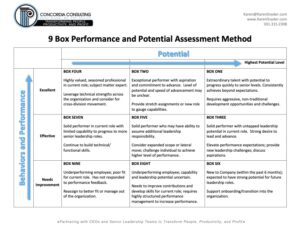
Click image to enlarge
Running an Effective 9 Box Discussion
When facilitating a 9 Box meeting, set the stage for active listening and strategic decision-making. Encourage leaders to focus on what the organization needs for the future, rather than personal preferences or biases. While developmental opportunities are worth noting, the primary emphasis should be on leveraging strengths — because strengths drive organizations forward.
Turning Insights into Action
The 9 Box isn’t just an assessment tool; it’s a roadmap for development. Once talent is placed within the grid, the next step is to initiate mentoring, shadowing, coaching, and other support activities to help high-potential employees grow into future leadership roles. Succession planning is an ongoing process, not a one-time event — so be proactive in guiding development.
Navigating Legal and Ethical Considerations
Confidentiality is critical in 9 Box discussions. Never make promises — or even imply — that an employee is guaranteed a specific leadership role. Circumstances change, boards have strong opinions, and legal risks arise when employees feel they were misled about career progression. The safest approach? Keep discussions private and focus on developing talent rather than making commitments.
By using the 9 Box method strategically and responsibly, organizations can build a strong leadership pipeline, ensuring future success while maintaining fairness and integrity in the process.




0 Comments