
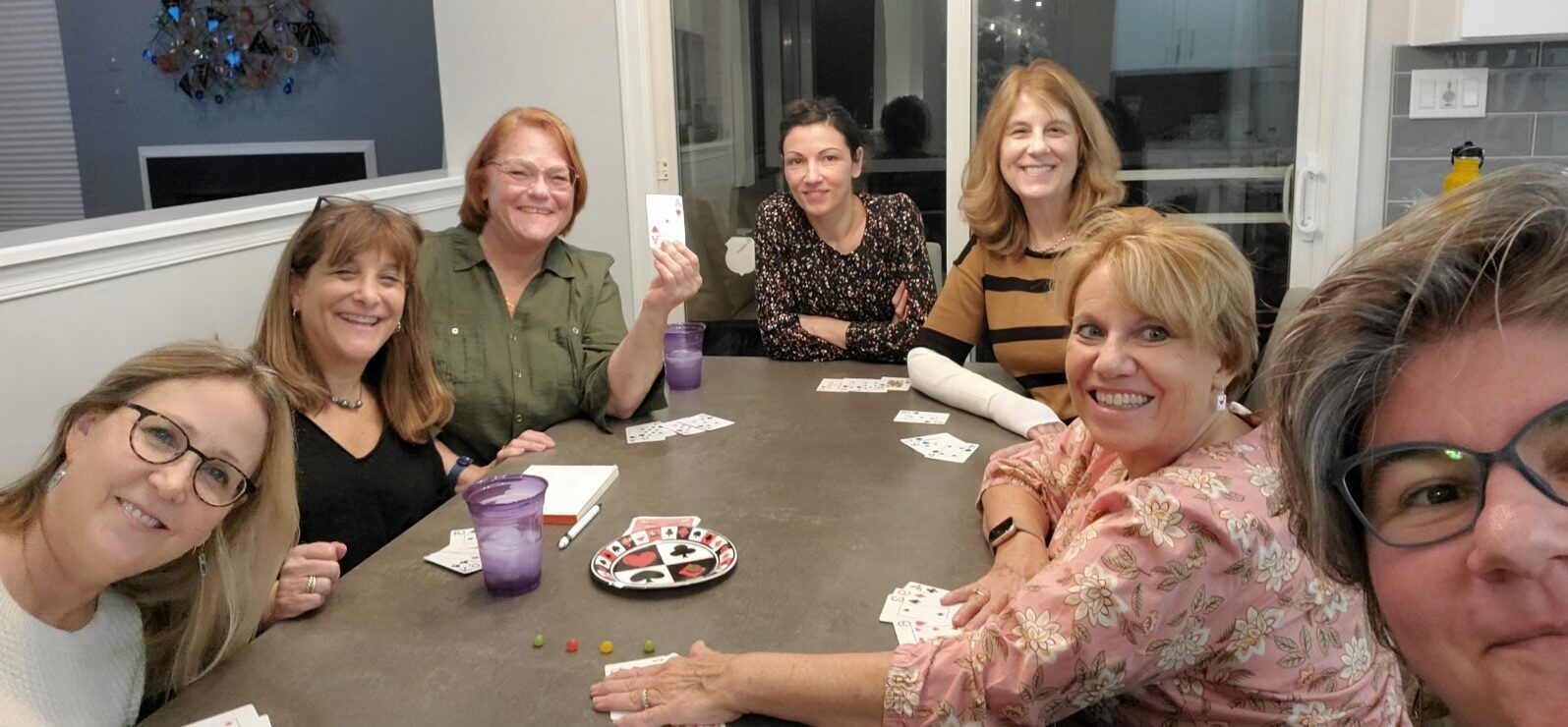
I play cards with a group of women. There’s a little food, a little wine, and a lot of laughter that gets louder as the evening goes on.
When the group first started, the hostess shouted to her husband in the kitchen, with silliness in her voice, “The dessert isn’t going to make itself!” She and her hubby had agreed before we arrived that he would assemble the confection so she could stay at the card table.
We loved the interaction so much it became our tagline. “The cards aren’t going to shuffle themselves.” “The dishes aren’t going to clear themselves.”
I couldn’t get the phrase out of my head when I was working with a C-Suite executive last week. We had been dancing around the same topic for two meetings. When was he going to have that difficult conversation he needed to have with a direct report? He had every reason to delay: not the right time, too much going on, he wanted to wait until after the quarterly review.
The conversation isn’t going to start itself, I mused. Fortunately this thought was still just in my head and not out of my mouth.
It’s true, isn’t it? The longer we wait, the more that undone action costs us. While we wait for the perfect moment, the moment passes. The direct report continues the same negative behavior. Six months later, we’re in exactly the same spot, or perhaps even worse.
And teams notice when leaders hesitate. When employees are waiting for answers and direction, they lose energy, enthusiasm, and motivation. It’s a sure way to zap morale quickly. And when information and decisions sit in the back of our minds long after we’ve moved on to other things it’s so exhausting that it has a name: the Zeigarnik effect. It’s when our brains hold onto unfinished business and it makes even small decisions feel overwhelming.
And sometimes, it costs us the people we most want to keep. I’ve worked with talented professionals who left organizations not because anything was terrible, but because nothing was moving. Stagnation, it turns out, is its own kind of answer.
None of this means you should rush decisions that deserve real thought. Some do. But there’s a difference between taking time to think and using thinking as a substitute for deciding.
A question worth sitting with: Is there a conversation, a decision, or a next step I’ve been putting off, not because I need more information, but because starting it feels uncomfortable?
If the answer is yes, you probably already know what to do. The dessert isn’t going to make itself. And neither is the future you’re waiting for.




0 Comments