
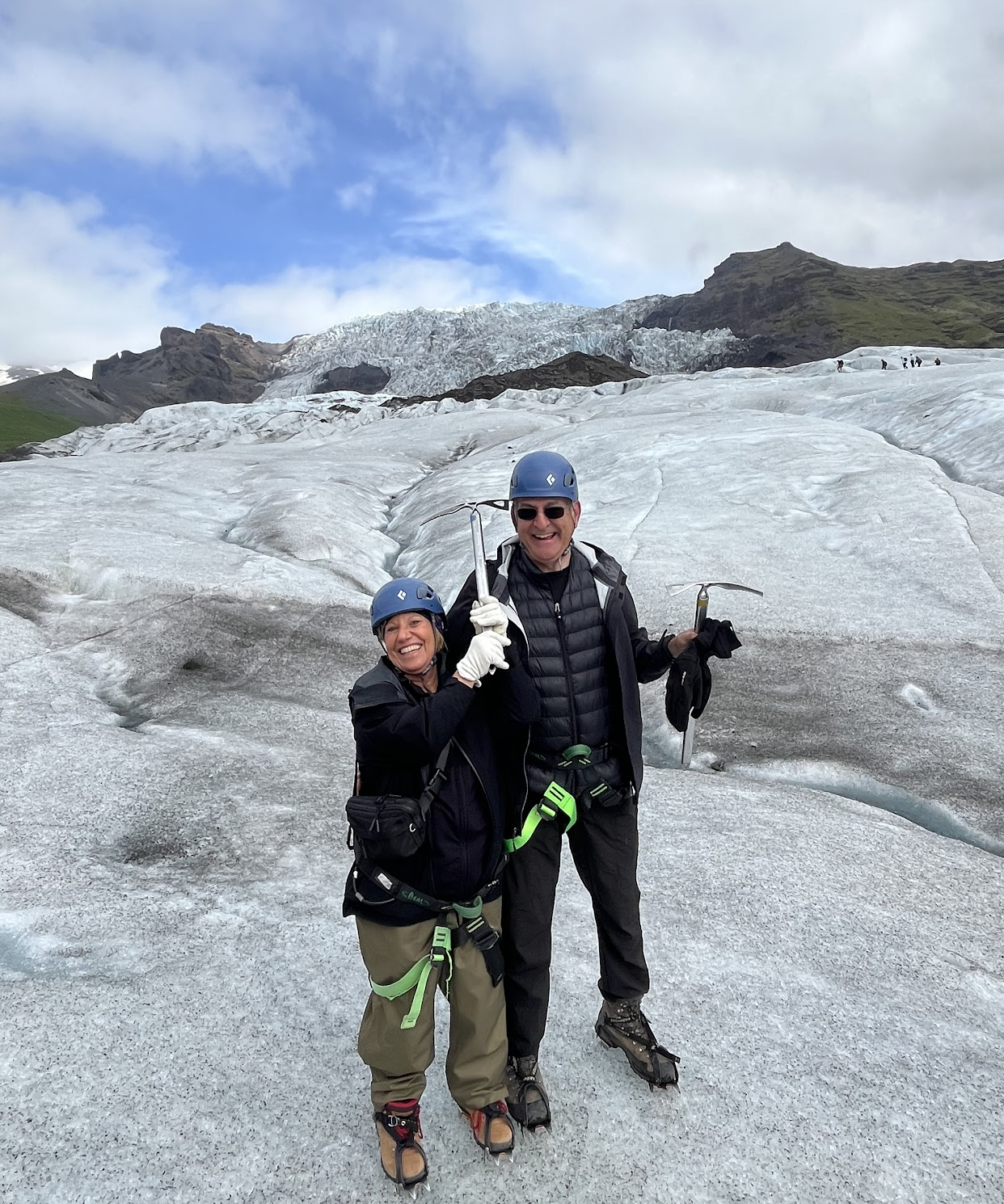
A few weeks ago, I taught a facilitation class, and I needed a way to help participants think about their role as facilitators. I kept coming back to one thought: facilitators don’t direct, they guide. As I sat with that, I remembered an excellent guide who led my husband and me on an ice hike in Iceland, someone whose judgment our lives genuinely depended on. What does facilitation have to do with leading a group across a glacier? If you were about to walk out onto the ice with a guide you’d never met before, what would make you trust them?
That’s where GUIDES came from, a framework I developed to think about facilitation.
An effective facilitator:
Grounds the Room
A good trail guide manages the moment, not the person. The same is true in a meeting. When someone is dominating, disengaged, or derailing the conversation, a facilitator’s job isn’t to diagnose why, instead it’s to protect the group’s ability to keep moving forward.
Understands Content and Process
Most of us instinctively track the topic on the table. We know the goal of the meeting and we focus on it. Few of us are trained to track processes: who’s actually speaking, who’s being quietly talked over, how the group is really making decisions underneath the surface conversation. A guide who only watches the trail and never watches the hikers will not realize if someone is struggling and needs water, or is about to lose balance.
Invites Every Voice
There’s a small language shift I love. Instead of asking a room, does anyone disagree, try asking, “What am I missing?” The first question invites conflict. The second invites contribution. Same intention, completely different result.
Drives Toward Decisions
A guide who wanders is not a guide anyone follows for long. Meetings need the same focus and direction. Discussion has value, but at some point the room needs an actual decision, not just another round of talking.
Ensures Comfort
People don’t speak up in rooms where they don’t feel safe to be wrong. This one is invisible when it’s working and completely obvious when it isn’t.
Secures Accountability
A decision without an owner and a date isn’t a decision; it’s simply a suggestion.
Which of these six is your strongest instinct already, and which one would you admit you’re still working on?




0 Comments